
August 17, 2026
How Blue Ice Caves Actually Form
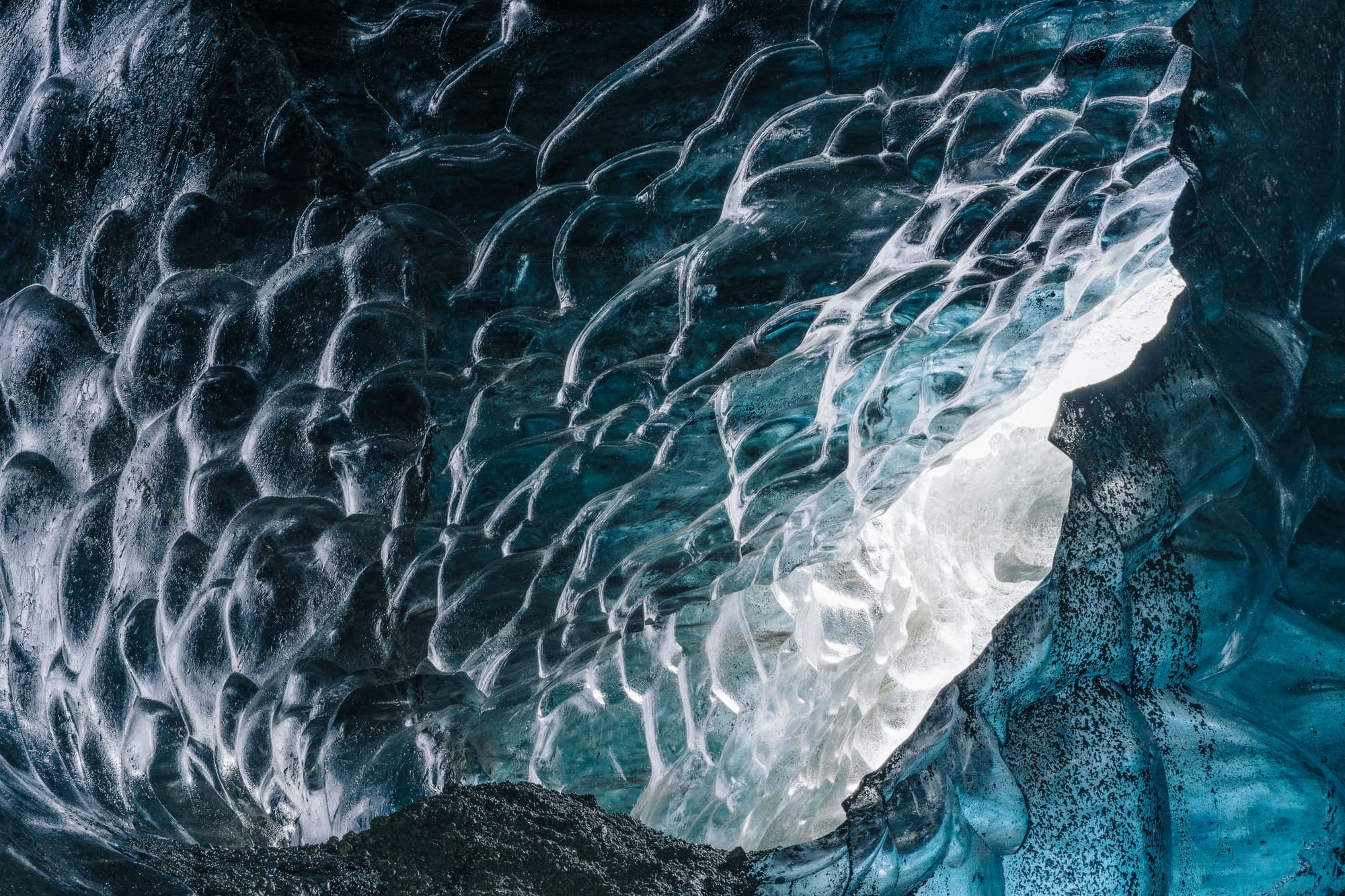
The blue color comes from density, not dye. As snow compresses into glacier ice over decades or centuries, it squeezes out air bubbles. Denser ice absorbs more red light and reflects more blue — the same reason deep water looks blue rather than clear.
The caves themselves are carved by meltwater. In summer, water finds cracks and weak points in the glacier and slowly erodes tunnels and chambers through it. When temperatures drop in autumn, the meltwater stops, and what's left is a stable network of tunnels through solid, ancient ice.
Every cave is different because every glacier melts differently each year — the ice you'll see this winter is a shape that's never existed before and won't exist again once the following summer reshapes it. That's part of why guides need to check each cave before every tour, and why no two seasons look quite the same.